
We use cookies on this site to enhance your experience.
By selecting “Accept” and continuing to use this website, you consent to the use of cookies.
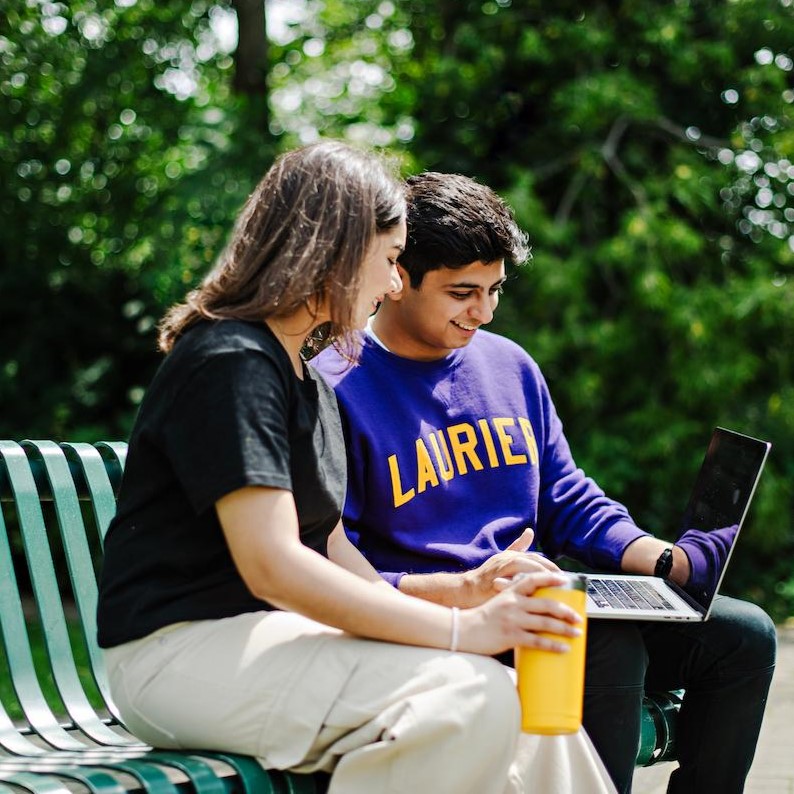
Across Brantford, Milton, Waterloo Region, and Yellowknife Laurier’s campuses are surrounded by unique, natural landscapes. Whether it is trail systems or conservation areas, students are encouraged to explore how connected our campuses are to the local community.
As conversations around wellbeing, climate change, and sustainability continue to be more prominent, access to community gathering spaces and parks has become more important. Laurier’s presence in various communities demonstrates how education and research can be applied to strengthen connections between people and nature.
One example of “learning through landscapes” is in the Geography and Environmental Studies program, where students apply classroom learning to real-world challenges and solutions. In the second-year course, Cartography (GESC 251), students were tasked with utilizing StoryMaps to tell a story about an immersive experience in nature using maps.
Amy Reyes, second-year Environmental Studies student, created a StoryMap on the “Top 10 Underrated Grand River Conservation Authority (GRCA) Hiking Spots.” In her role as a maintenance student with the GRCA she was able to visit over 50 GRCA properties, travelling almost 10,000km in under four months.
“The Grand River features some of the most beautiful natural environments I have seen in Ontario. Beyond the conservation areas, there are several miscellaneous properties and trails that are open to the public yet remain largely underexplored. This StoryMaps assignment gave me the opportunity to not only share these incredible areas with the community, but also encourage adventure within the local environment, and promote the much-needed support for nature conservation!” – Amy Reyes
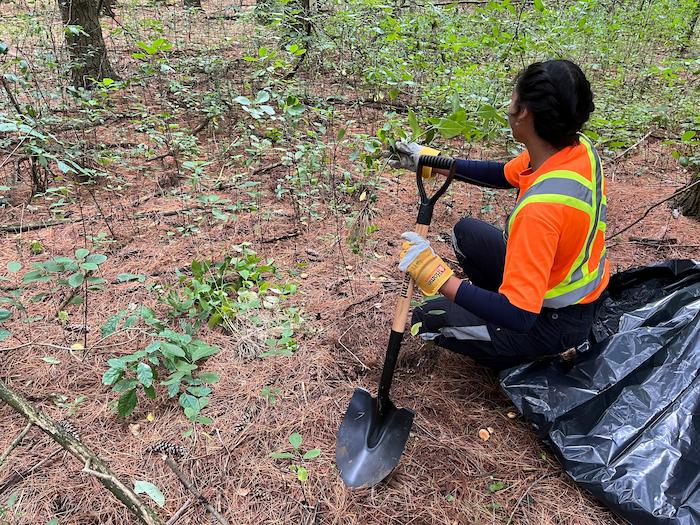
In the image above, Amy is removing and bagging invasive dog strangling vine plants at Dumfries Conservation Area.
Projects like this demonstrate the value of applying classroom learning to the design of tools and resources for communities. In this case, the GRCA StoryMap that came out of the course will be able to be used by others to explore unique natural landscapes.
The Brantford campus, located in the downtown core, is closely connected to the Grand River. From downtown, students, staff, and faculty can access the riverfront and recreational trails including the shared use trail, Trans Canada Trail, the SC Johnson Trail, and Brock’s Route. Whether it’s cycling, walking or enjoying the region’s biodiversity, there are plenty of opportunities to reconnect to nature and the surrounding ecosystems. For a more immersive experience, consider a day trip to the Brant Conservation Area. As a guest, you can enjoy camping, canoeing, swimming, fishing, hiking and more! While the campus is in the downtown area, you are minutes away from stepping out into naturalized spaces.

Milton has some of Ontario’s most beautiful landscapes through its connection to local conservation areas and the Niagara Escarpment. There is no shortage of places to visit for hiking, cycling, and spending time outdoors. As Laurier continues to expand its presence in Milton, there will be more opportunities for connecting classroom learning and immersive outdoor experiences. The unique natural setting allows for an immersive setup for community engagement, conservation, and recreation. Currently, the Laurier Milton campus is situated near several conservation areas including Hilton Falls and Kelso Conservation Area. Visit the Conservation Halton homepage for information on park activities, hours, and more.
Near all Laurier campuses, you’ll find connections to trails, conservation areas, and waterways. As these campus communities continue to grow and evolve, university plays a vital role in supporting more sustainable future. Whether it’s enjoying nature recreationally or applying classroom learning to nature, all these communities have something to offer. Laurier will continue to showcase learning and recreational experiences happening beyond the campus’ borders and into the communities we live, work, and study in. To learn more about naturalized spaces on and around campus, visit the Sustainable Initiatives webpage.
For questions related to sustainability programming and offerings, reach out to the Laurier Sustainability Office at sustainability@wlu.ca.
Contact Us:
E:
sustainability@wlu.ca
T:
548.889.4236
Office Location: 202 Regina St, R101, Waterloo ON