
We use cookies on this site to enhance your experience.
By selecting “Accept” and continuing to use this website, you consent to the use of cookies.
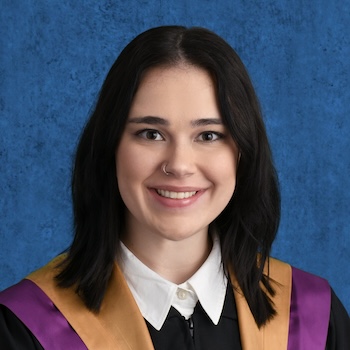
By: Maanvi Chahal, Outreach & Support Peer
When most students think about careers in health care, the usual options come to mind - doctor, nurse, maybe dentist. But after speaking with Emily, a Medical Radiation Technologist specializing in MRI, it’s clear there’s an entire side of medicine that many students don’t even realize exists that plays a huge role in patient care.
Emily graduated with a double major in Biology and Psychology, along with a minor in Chemistry, before pursuing a career in medical imaging. Although she was initially unsure of her exact career path, she knew she wanted to work in health care. After completing her undergraduate degree, which was extended due to pandemic-related disruptions, Emily explored various medical professions. She wanted a role in medicine, but becoming a doctor meant many more years of school, and nursing didn’t feel like the right fit. After researching different imaging careers such as X-ray and ultrasound, MRI stood out. Unlike X-rays, MRI doesn’t involve radiation, and the images are extremely detailed. As Emily described it, MRI images are “really pretty,” especially when looking at the brain, something that connected back to her psychology background.
She completed her training at The Michener Institute of Education in Toronto, entering the MRI program as a first-discipline student, meaning she didn’t have prior imaging credentials like X-ray or CT. The program was intense while being hybrid, with full course loads, labs, and continuous learning across all semesters. She also completed an eight-month clinical placement at Grand River Hospital in Kitchener, which gave her real hospital experience. Emily says her undergraduate years helped her succeed because she had already developed strong study habits, time management skills, and the confidence to communicate with professors and ask questions. Those academic skills made it easier to handle the heavy course content and adapt to the fast-paced clinical environment.
Emily’s job goes far beyond “taking pictures”. A typical shift starts with reviewing a list of scheduled patients and making sure all documentation matches the requested scans. Since MRI uses a very powerful magnet, safety while screening is a major responsibility. She checks for metal implants, injuries involving metal, and even small things like jewelry or metal fragments that could cause injury in the scanner. Once patients are cleared, she prepares them for the exam and positions them correctly. Emily constantly communicates with them during the scan to make sure they are comfortable and calm.
Patient interaction is one of the most important parts of her job. Many people coming in for MRI scans are anxious, in pain, or claustrophobic. Emily sees part of her role as helping patients feel safe and supported during a stressful experience. She finds it especially rewarding when someone leaves saying the scan wasn’t as scary as they expected. At the same time, the work can be emotionally challenging. MRI technologists are trained to recognize serious abnormalities, but they cannot share results with patients. Emily explained how difficult it can be to stay neutral when a scan shows something concerning, especially when working with children, while still being kind and reassuring.
According to Emily, technical knowledge is important, but people skills are just as critical. Successful MRI technologists need strong communication skills, empathy, patience, attention to detail, and the ability to work as a team. MRI departments often operate with two technologists per scanner, so teamwork is essential to keep patients moving through the schedule efficiently while maintaining the quality of images. She believes that being able to calm people and communicate clearly can make a huge difference in both patient experience and scan results.
To enter this field, students typically complete at least some university education, and many, like Emily, finish an undergraduate degree first. MRI programs such as the one at Michener require academic transcripts and includes assessments like the CASPER test, which evaluates communication and empathy. The training includes intensive coursework, labs, and clinical placements, followed by a national certification exam to become licensed. Emily notes that MRI is a growing field, with more machines being installed in hospitals and clinics and imaging technology constantly improving. New techniques can now capture moving images, like videos of the heart beating, and future developments may include more open scanners to reduce claustrophobia and other technological advancements.
For students interested in this career, Emily recommends reaching out to professionals in the field, asking questions, and taking initiative in their education. She emphasizes the importance of staying organized, seeking help when needed, and being open to learning during clinical placements. Building positive relationships is also crucial, as health care is a connected field.
If she could give advice to her younger self, Emily says she would stress less and trust the process. She believes career paths are rarely linear and that taking time to explore options can lead to fulfilling opportunities.
Contact Us:
Visit our locations and contacts page for office locations and service hours.