
We use cookies on this site to enhance your experience.
By selecting “Accept” and continuing to use this website, you consent to the use of cookies.

From August 21st to 23rd, Laurier was the host institution for the first joint meeting of the Canadian Network for Economic History (CNEH) and the Indigenous Economics Study Group (IESG). Our university’s partnership with the Government of the Northwest Territories, and commitment to Indigenous and Northern research, meant that we were well-positioned to facilitate the organization of this conference. The conference, organized by David Rosé of Laurier’s Economics Department with the help of the IESG leads Rob Gillezeau (University of Toronto) and Maggie Jones (McGill), brought together more than 50 scholars who made the trip north to showcase cutting-edge economics research for practitioners and stakeholders across the territory.
Set in Yellowknife, a city of roughly 20,000 situated within the traditional lands of the Yellowknives Dene First Nation (YKDFN), the conference opened with remarks from Bobby Drygeese, followed by song performance from YKDFN drummers.
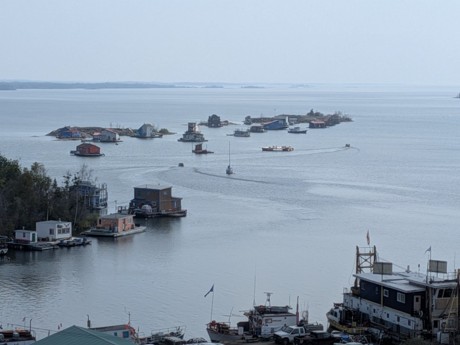
Over the next three days the conference connected economists from across the country — from the University of British Columbia to Memorial University of Newfoundland — and drew international researchers from the U.S., Europe, and Australia. Multiple presentations emphasized the role that historical circumstances faced by Indigenous peoples and disadvantaged minorities can play in shaping outcomes decades later. Talks by Nathan Nunn (UBC) and Cain Polidano (University of Melbourne), for example, shed light on how the burning of Black businesses in Tulsa, Oklahoma and acts of violence against Australian Indigenous peoples had ramifications many years later.
The conference also saw excellent presentations from two keynote lecturers. Dustin Frye (University of Wisconsin–Madison) delivered the Mary MacKinnon Memorial Lecture at the Prince of Wales Northern Heritage Centre, where he described his careful digitization and linking of decennial census returns, the annual Indian Census Rolls, and land patent records to study the impact of the Dawes Act on the economic standing of subsequent generations of Native Americans.
Sascha Becker (University of Warwick and Monash University) gave the CNEH keynote, connecting the economics literature on forced migration (and the shortcomings of much of that treatment) to the expulsion of Jewish scientists from Italian universities, an almost universally overlooked event. This served as a poignant reminder that the questions of persistence running through the conference programme are not confined to any one country or century.
A highlight of the conference was a panel discussion on how historical research can better support current policy objectives, featuring Angela Redish (UBC and Laurier Econ alum), Donn Feir (University of Victoria), Katherine Mansfield, a senior public servant with the Government of the Northwest Territories’ Department of Finance, and Chief Doreen Arrowmaker of Gamètì (Tłı̨chǫ Government), the first woman to serve as chief of her community. While much was covered by the panel, a key takeaway was how much our field can offer to those addressing serious economic and social issues on the ground in the territory, from mine closures to fostering sustainable economic growth.
Laurier’s economics department was well-represented, with four faculty members presenting their research. Jeff Chan presented work on tariffs and manufacturing growth in the 19th century United States, while Azim Essaji discussed findings from a project investigating Additions to Reserve policy in Canada for First Nations. David Rosé presented new research on the spatial consequences of the construction of the Triborough Bridge in New York City. Noah Spencer, one of the department’s newest hires, presented his paper on the on-reserve/off-reserve education gap for Indigenous students. He was also announced as the co-winner of the inaugural Frank Lewis Award for the best paper in Indigenous economics, named for the Queen’s University economic historian whose work on the fur trade and on Indigenous–European commerce helped shape the field in Canada.
Graduate students were a visible presence throughout. Thanks to generous support from the conference’s sponsors, we were able to offer all student participants travel support. In total, nine presented posters and two presented papers, travelling from as far away as the University of Arizona and LUISS Guido Carli in Rome.
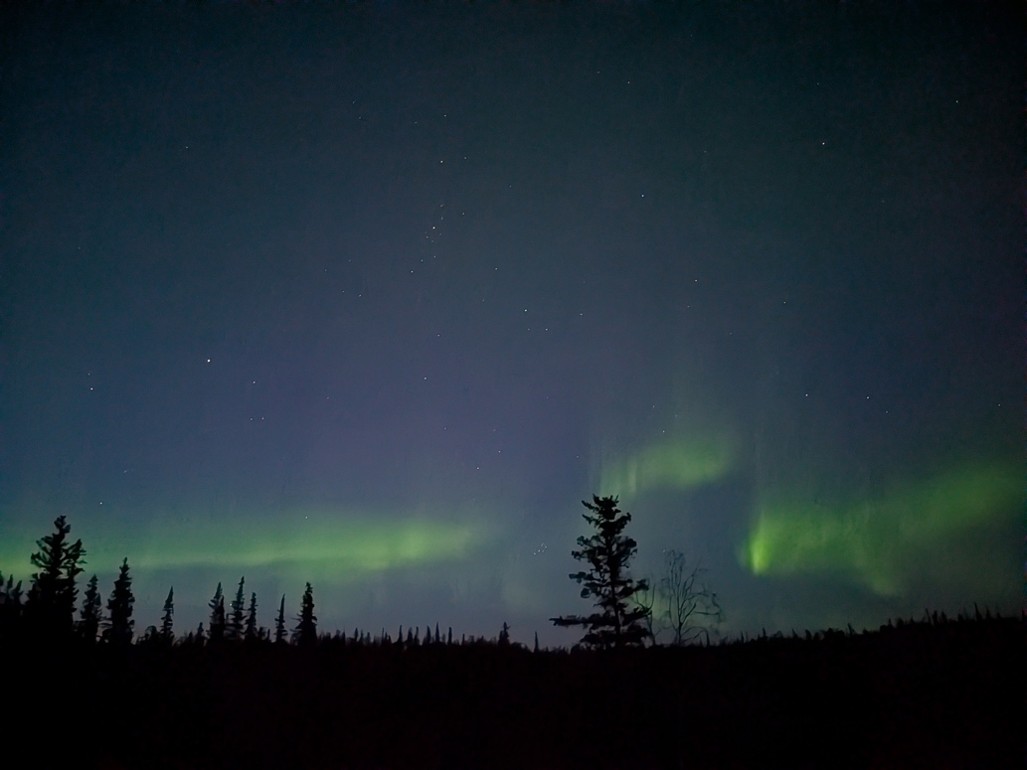
In addition to attending conference sessions, attendees had other opportunities to connect with the NWT and to learn about its history. On the Friday morning, a small group of academics working in Northern and Indigenous policy areas, including Laurier Econ’s very own Noah Spencer, met with NWT Minister of Finance Caroline Wawzonek at the legislature to share their expertise and to learn about the most pressing economic concerns of the territory. Some attendees participated in a pre-conference excursion to the Northwest Territories’ archives, where one notable highlight was an original journal from a Hudson’s Bay Company fur trading post. Others attended the Hand Games, a tournament hosted by the area’s Dene communities that brings together Indigenous peoples from across western Canada, including Alberta and British Columbia. Lastly, for many, a trip to the Northwest Territories was not complete without a late-night trip to see the northern lights and the undisturbed boreal forest (pictured).
This event would not have been possible without the generous financial and logistical support of the Laurier research community (Dean Kyle Murray and VP-Research Jonathan Newman deserve special mention). For more information on the conference, including the programme and our other sponsors, please visit the CNEH website.
Thank you to Jeff Chan and David Rosé for providing these conference highlights, and to Kris Inwood of the University of Guelph for the photos.
Did you know Laurier’s economics department has a newsletter that you can subscribe to? Sign up at: https://bit.ly/lednewsletter . You can check out all of our articles hot off the presses as they come out on the site (accessed through the link) as well!