
We use cookies on this site to enhance your experience.
By selecting “Accept” and continuing to use this website, you consent to the use of cookies.

In late August I had the pleasure of attending the annual meetings of the International Institute of Public Finance (IIPF) in Lisbon, Portugal. The IIPF is a global association of academic economists whose research focuses on Public Economics defined very broadly, including essentially anyone working on topics that involve the government. Its website notes that there are roughly 600 members across 50 different countries. Being a global association, the venue for its annual conference circulates around the world, with recent meetings held in Kenya, The Czech Republic, USA, and Austria. Next year it will be in Poland.
I had three main goals for this year’s meeting: 1) present my research paper, 2) learn as much as I could about cutting-edge research in public economics, and 3) consume as many pastels de nata as possible. Focusing first on the most important goal, a pastel de nata is a flaky tart filled with custard, toasted on top and sometimes topped with cinnamon and icing sugar. Based on my reading of Wikipedia, they were created by Catholic monks at the Jeronimos Monastery in the Belem area of Lisbon back in the 18th century. There is a shop next to the monastery that sells tarts based on the original recipe, so naturally this was the first stop on my quest to eat my body weight in custard tarts. While I did buy one there, I put it in my backpack because I wasn’t hungry at the time, only to forget about it until the next day and ultimately not eat it at all. This was my biggest regret of the trip. I did, however, get a tart from the second most famous bakery in Lisbon, which was extremely tasty, especially when topped with the optional cinnamon. Outside of that, I consumed several other tarts from places including the grocery store, the conference snack table, and other bakeries. While they were all good, none compared to the second-best tart.
When I wasn’t eating Portuguese baked goods, I was at the conference, hosted at the Lisbon School of Economics. I presented a paper (co-authored with Elizabeth Dhuey from the University of Toronto) using a sample of students in British Columbia looking at the long term consequences of the birth date effect, which is the phenomenon that students born just after a school entry cutoff do better in school than those born just before it. Students born right after the cutoff enter school up to one year older than others in the class, which I show in the paper translates in the short term into better test scores, less grade repetition, a smaller likelihood of classified as learning disabled, among other things. In the long-term, those effects fade and those who enter school older don’t hold any meaningful advantage in postsecondary attendance or graduation, and adult labour market outcomes like income, social assistance receipt, and employment insurance receipt. One exception is that the oldest entrants are about 3 percentage points more likely to be married at age 30, a result that we are still trying to explain.
I also attended several other sessions on topics like the effect of pensions on retirement and savings, labour supply responses to income maintenance schemes, and the responsiveness of income to income taxation. There was also a particularly timely keynote address by Kimberly Clausing from UCLA that evaluated Trump’s tariffs, concluding that they don’t raise much revenue, don’t cover costs of tax cuts enacted at the same time, are paid almost entirely by firms and people in the US, decrease growth, and fall disproportionately on lower income households. Interestingly, a simulation analysis shows that raising revenue instead through increases in corporate taxation suffers from fewer problems, and in particular is more progressive.
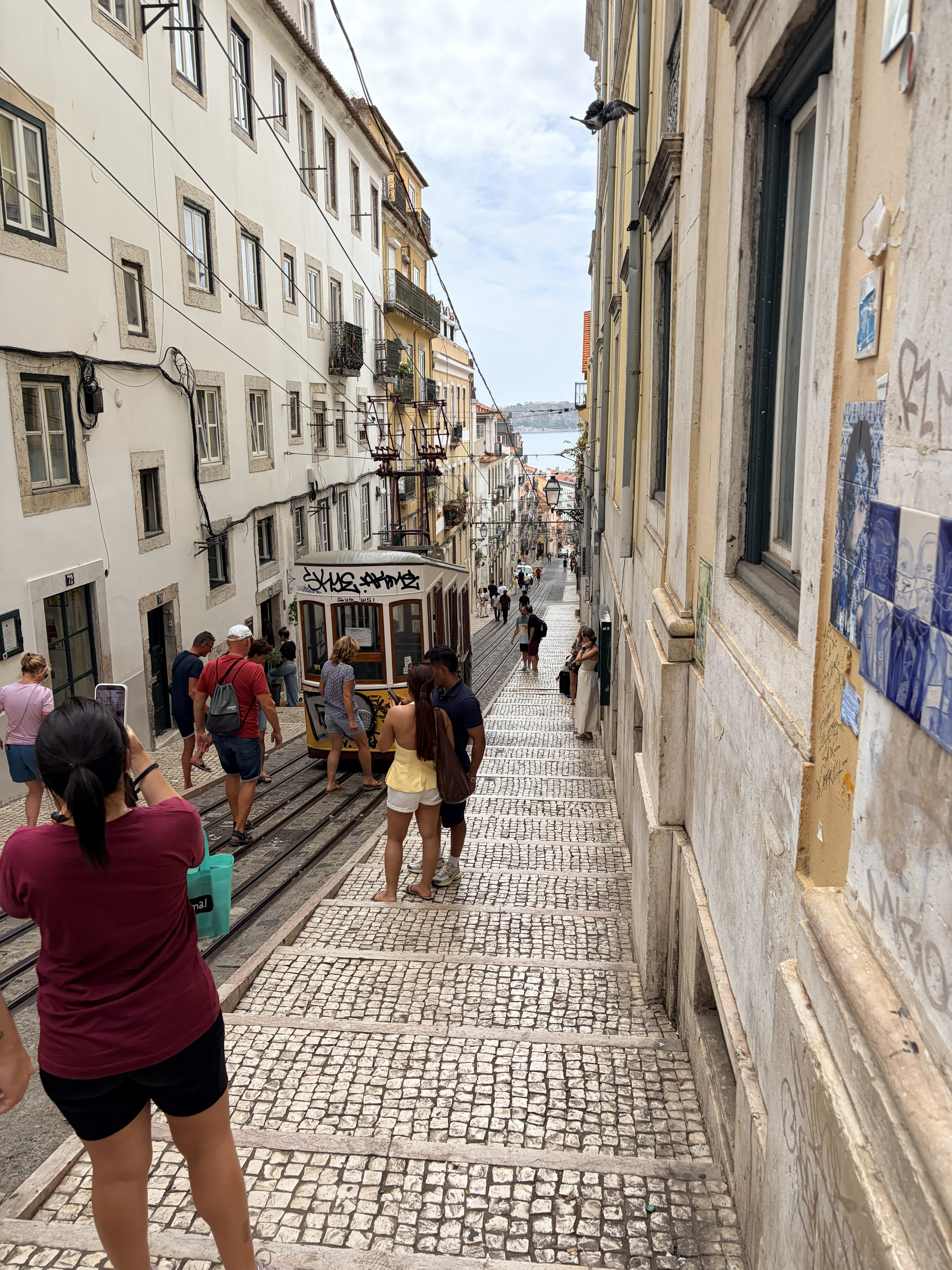
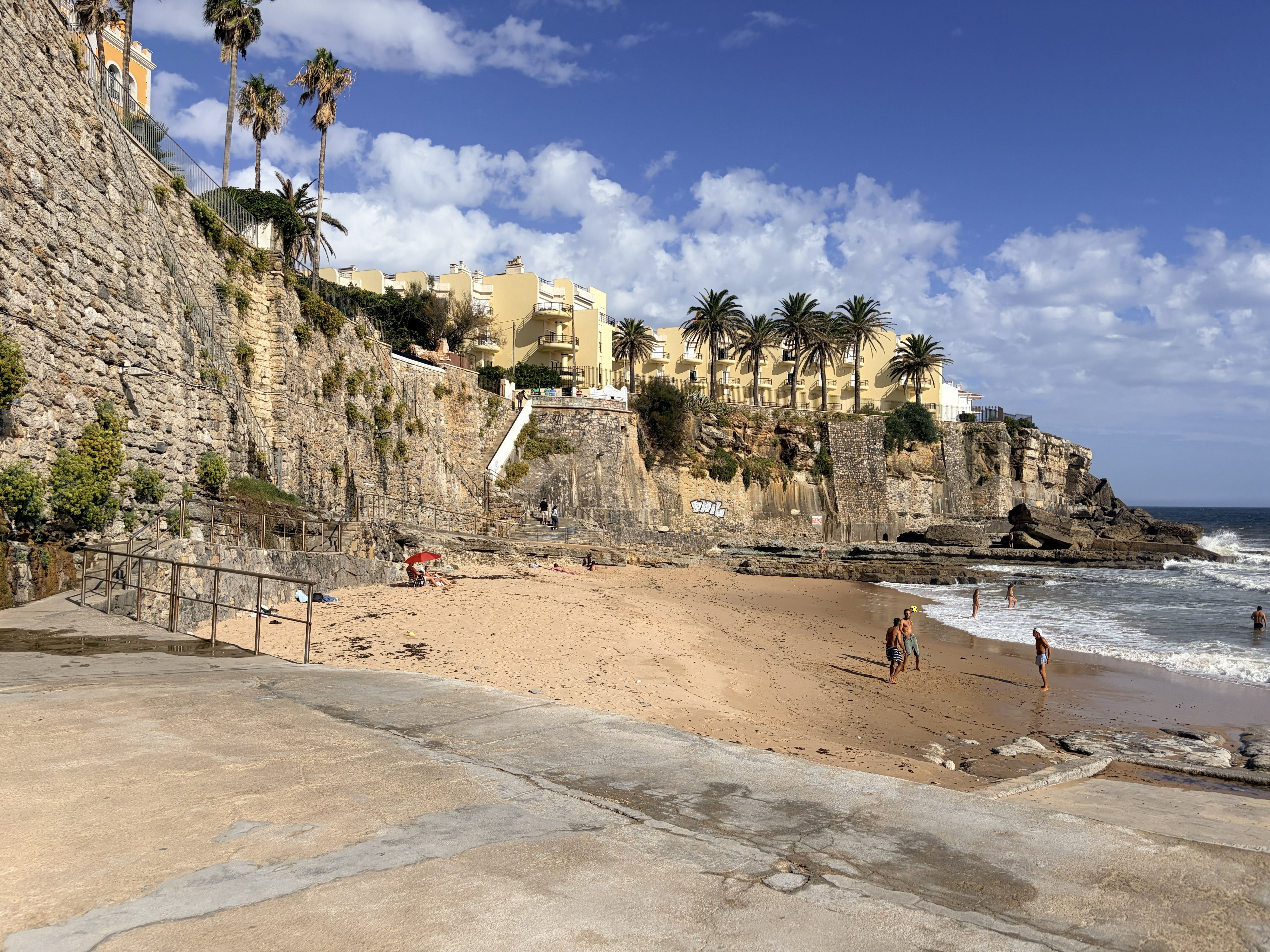
One of the benefits of attending conferences in various places around the globe is that you can be a tourist in your free time. My family accompanied me on this trip, and my 8 and 9 year old kids were completely uninterested in touring 500 year-old monasteries or walking up and down the hilly, cobblestone sidewalks of Lisbon. We did, however, make it to Sintra to see Pena Palace, to the city of Cascais to walk along the beach, and to a very interesting superhero themed restaurant that had easily the most impressive collection of figurines (ranging from superheroes, to movie characters, to anime) that I have ever seen.
Did you know Laurier’s economics department has a newsletter that you can subscribe to? Sign up at: https://bit.ly/lednewsletter . You can check out all of our articles hot off the presses as they come out on the site (accessed through the link) as well!