Applying an Anthropological Lens to Aging: Advancing Person Centred Care for Older Adults
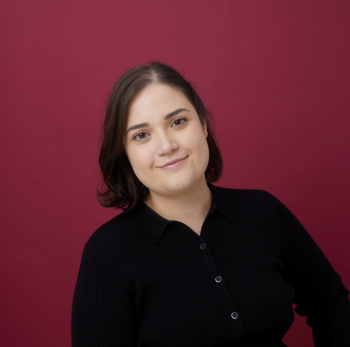
Elicia Chamoun has an Honours BA in Anthropology from Wilfrid Laurier University and a Master’s of Social Work from the University of Toronto. She currently works as a Virtual Behavioural Social Worker at the Regional Municipality of Durham. She works on multidisciplinary teams to support behavioural interventions for people living in long-term care homes across Durham Region and surrounding areas. Her work focuses on improving the quality of care for older adults, particularly those living with dementia who experience responsive behaviours. She brings a holistic, person-centred perspective to understanding complex challenges and improving systems of care.
"I remember sitting in AN101 back when I was a first-year student at Laurier and realizing that I needed to switch my major to anthropology. AN101 convinced me that anthropology was the discipline that best aligned with my interests in human culture and behaviour, as well as my long-term goal of making a positive impact in the community. I had the opportunity to take a variety of different anthropology courses on topics related to the environment, law, religion, economics, and business. The courses available in the Anthropology Program at Laurier are unique and allow students to think critically, ethically, and holistically while looking at the globe through an anthropological lens.
Fast forward to the final year of the program. We were required to take AN410 Ethnographic Methods in Anthropology, which allowed us to conduct our own qualitative research projects in the community. This course provided me with the necessary skills to design a community-based research project from the ground up. After conducting participant observation and interviews with the residents of Waterloo, I wrote an ethnographic report where I presented my findings about the importance of community and space during my fieldwork.
After graduating in 2016, I started working at Community Care Durham, a local non-profit agency that focuses on providing support to older adults to enable them to age in place. This community organization provides social service programs such as Meals on Wheels, transportation to medical appointments, and adult day programs for people with dementia. These programs allow older adults to remain independent and autonomous. They also give caregivers some relief by providing support to their loved ones. My anthropology background prepared me for my role as a full-time service coordinator, where I was responsible for coordinating services and supporting clients and volunteers across the organization. My role as a service coordinator allowed me to advocate for older clients with cognitive impairments, mobility issues, and financial inequalities in my community while assessing their needs on a daily basis. Anthropology prepared me for this work by teaching me about the importance of community and providing me with skills to advocate for those who need to be heard.
"My anthropology background prepared me for my role as a full-time service coordinator, where I was responsible for coordinating services and supporting clients and volunteers across the organization."
I also had the opportunity to work at the Toronto Rehabilitation Institute as a researcher, where my anthropology background prepared me to objectively analyze data, work directly in the community in diverse settings, and work collaboratively with clinicians, clients, participants, caregivers, and other researchers. My social science background has also helped me develop strong communication, presentation, and relationship management skills, which have been valuable when working with different stakeholders throughout my career.
After this, I worked for the Alzheimer Society of Toronto as a program coordinator, where I developed a program to support the needs of isolated people with dementia and their caregivers during the COVID-19 pandemic. As many in-person programs were shut down due to restrictions, many people who relied on community programs were unable to participate. Creating the first Teleconnect program alongside dedicated volunteers and rolling it out as a multilingual program was beneficial not only to clients but also to staff, who were able to recommend another low-barrier, over-the-phone program for their clients. Anthropology prepared me for this role, as I was able to identify the gaps and barriers of other similar programs and use a culturally sensitive, collaborative lens.
I completed my Master of Social Work at the University of Toronto to complement my anthropology background and experience working alongside communities and clients. This degree built on my anthropology background and professional experience, allowing me to further develop my skills in understanding and addressing complex social issues. By using my anthropological toolbox to understand communities, cultures, and groups of people, I can take a systems-level approach to developing and supporting quality improvement across different clinical and non-clinical spaces.
"By using my anthropological toolbox to understand communities, cultures, and groups of people, I can take a systems-level approach to developing and supporting quality improvement across different clinical and non-clinical spaces."
Upon graduation, I worked as a Social Worker at the Centre for Addiction and Mental Health (CAMH), and now work at the Regional Municipality of Durham, where I help in providing long-term care behavioural support alongside multidisciplinary teams to promote better health and well-being outcomes for our own residents and the long-term care homes we support across Durham Region and surrounding areas. This role allows me to analyze patterns, apply problem-solving skills, and adapt to working across different groups and with varying levels of resources, which are all skills that anthropology equipped me with.
I was drawn to this type of work because I wanted to better understand and address the challenges I was hearing about from clients, caregivers, and clinicians, particularly the growing barriers to accessing health services and the social isolation experienced by many older adults. Community empowerment is one of the many things I have learned about in anthropology. I have been able to apply the anthropological toolbox I acquired during my degree to community-based issues such as aging. I strongly believe that community health advocacy and anthropology share similar qualities and characteristics. For example, anthropology has given me the desire to create a sustainable impact in my community and the ability to problem-solve in order to make positive change. I often work with many different stakeholders, disseminating data and communicating new ideas.
"Looking back at my time at Laurier, I can see how the skills and perspectives I developed through anthropology have continued to influence my work and the opportunities I've pursued."
Throughout my career, my anthropology background has allowed me to approach challenges with an open mind, think critically, and understand issues from different perspectives. It has shaped the way I work with communities, collaborate with others, and identify opportunities to improve programs and services. Looking back at my time at Laurier, I can see how the skills and perspectives I developed through anthropology have continued to influence my work and the opportunities I've pursued. What started as an interest in understanding human culture and behaviour has become an important foundation for my career, and I hope to continue applying these skills to make a positive impact in my community."